
Circular Agriculture Platform (CAP)-Implementation Tool for Scaling Circular-Regenerative Agriculture as Bioeconomy Accelerator
- Dr. Isaac Mpanga

- Jan 31
- 4 min read
The accelerated depletion of natural resources and escalating environmental degradation underscore the urgent need for systemic transformation in our food production and consumption systems. The 2025 Global Circularity Gap Report identifies that current linear agricultural production models—characterized by extract-produce-dispose practices—have pushed humanity beyond the planet’s safe operating limits, threatening ecological stability and socio-economic resilience. For example, Clean Hub and World Bank data (reported by Voronoi) indicate that about 2 billion tons of solid waste are generated annually, with 44% coming from food waste and green biomass. These inefficiencies in our food system have economic, social, and environmental impacts that require urgent attention and alternative approaches.
This article presents a U.S. case study comparing the value and funding support of food surplus and waste activities versus agriculture exports from 2023.
U.S. Food Waste Statistics and 2030 Target
In 2016, U.S. food waste was 53 million tons, rising to 73.7 million tons in 2023 after a dip during the 2020–2021 pandemic. This figure is expected to continue increasing. Most of this food waste (65%) ends up in landfills, with a national target of a 50% reduction by 2030 (ReFED; Figure 1).

Figure 1: U.S. food waste in 2016, 2023, and 2030 target, and where the waste ends up (Adapted from ReFED reports)
The Value of U.S. Food Waste and Agriculture Export
Between 2020 and 2023, U.S. agricultural exports rose steadily from $151 billion to $175 billion—a 16% increase according to USDA data. During the same period, the estimated value of food surplus and waste surged from $217 billion to $382 billion—a 76% increase based on ReFED estimates, largely driven by inflation and consumer-level losses. Rather than viewing food waste and agricultural exports as competing priorities, this comparison highlights a dual opportunity: both represent significant economic value within the bioeconomy. Agricultural exports remain vital, but the growing value of food waste underscores the need for proportional investment in circularity initiatives—potentially equal to or greater than export programs—given their untapped potential to drive environmental, social, and economic returns in the context of bioeconomy.

Figure 2: Estimated value of U.S. food waste and agriculture export in 2023 (Data adopted from ReFED and USDA)
Circular-Regenerative Agriculture’s Potential in Bioeconomy Strategy
The current food systems focus on regenerative agriculture is insufficient, as many practices remain linear and inefficient without circularity. Therefore, a comprehensive approach that combines circularity and regenerative agriculture into a single system—with appropriate models and tools for planning, implementation, and reporting—is needed.
The Circular Planet Institute’s approach to food systems transformation with circular-regenerative agriculture represents the convergence of two complementary systems: circularity (reduce, recycle, reuse) and regenerative practices (restore and enhance natural systems). This integration offers significant potential for bioeconomy development by creating value from agricultural waste streams, enhancing resource efficiency, and supporting climate change mitigation (Figure 3). For example, ReFED 2025 report estimated the value of U.S. food waste in 2023 was $382 billion (1.4% of U.S. GDP) represents a significant opportunity for all stakeholders in the food value chain to pay attention to including the governments with similar or even more investments as in the agriculture export sector.
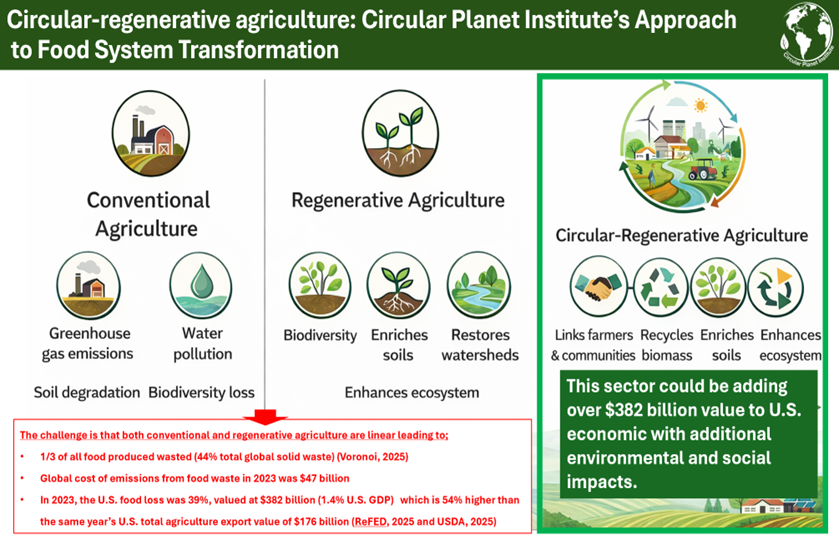
Figure 3: The bioeconomic benefits of the circular-regenerative agriculture approach by Circular Planet Institute
Benefits for Circular-Regenerative Agriculture
Circular-regenerative agriculture can accelerate the bioeconomy through multiple pathways. Integrating circular and regenerative principles at the farm level creates synergies that enhance environmental, social, and economic outcomes, support sustainable development, and open new market opportunities (Figure 4).

Figure 4: Benefits of the circular-regenerative agriculture approach by Circular Planet Institute
Implementation Challenges for Circular-Regenerative Agriculture
Key challenges hindering the adoption of circular economic principles in agriculture include:
Finance: Underfunding is the primary challenge. Despite the food waste sector’s high economic potential, the programs received far less investment compared to agriculture exports. This funding gap in circularity programs is a global issue, not just a U.S.
Social: Achieving behavior change across the food supply chain—from farmers to consumers—requires significant effort.
Technology and Frameworks: There is a lack of robust models, tools, and reporting frameworks for implementation, baseline measurement, and impact reporting. More research and business intelligence are needed for material flow optimization, circular economy assessment, and stakeholder engagement.
The Role of AI-Based Tool for Circular-Regenerative Agriculture Implementation
Realizing the potential of circular-regenerative agriculture requires addressing systemic barriers with implementation models and tools that foster innovation, investment, and adoption. The Circular Agriculture Platform (CAP) by the Circular Planet Institute is a key AI tool, offering implementation models that enable scaling with data verification and certification, creating new markets and value for food systems.
The AI-based CAP is built on scientific frameworks and protocols (Global Circularity Protocol, ISO59 020). The tool serves farmers, crop advisors, consultants, procurement leaders, NGOs, researchers, and bankers, and green investors as planning, measurement, and reporting tools for agricultural circularity and regeneration.
Key Recommendations
Develop integrated policy frameworks: Align agricultural, environmental, and economic objectives to support circular-regenerative agriculture.
Invest in enabling technologies: Prioritize the development and deployment of planning and implementation tools such as CAP.
Create innovative financing tools: Address economic barriers and incentivize circular-regenerative agriculture as a best practice for national food security.
Implement comprehensive capacity-building programs: Use models and tools such as CAP to strengthen skills across the value chain and enable multi‑stakeholder coordination and knowledge sharing.
The transition to circular-regenerative agriculture systems requires sustained commitment from multiple stakeholders and coordinated action across applicable models and tools like CAP that accelerate scaling. While challenges exist, the potential benefits for environmental sustainability, economic development, and social equity justify continued investment in research, policy development, and implementation support.


Comments